
Acoustic and Materials Exploration
Sentient Digital brings expertise in analyzing acoustic structural interactions across varying material properties. Through multiple contracts, SDi has conducted analytical modeling, high-fidelity numerical simulations, and experimental validation of acoustic systems. Areas of exploration include:
- Acoustic propagation across material boundaries
- Near-field behavior of individual transducers
- Beamforming in domains with material property gradient
- Acoustic wave interaction with resonant metamaterials
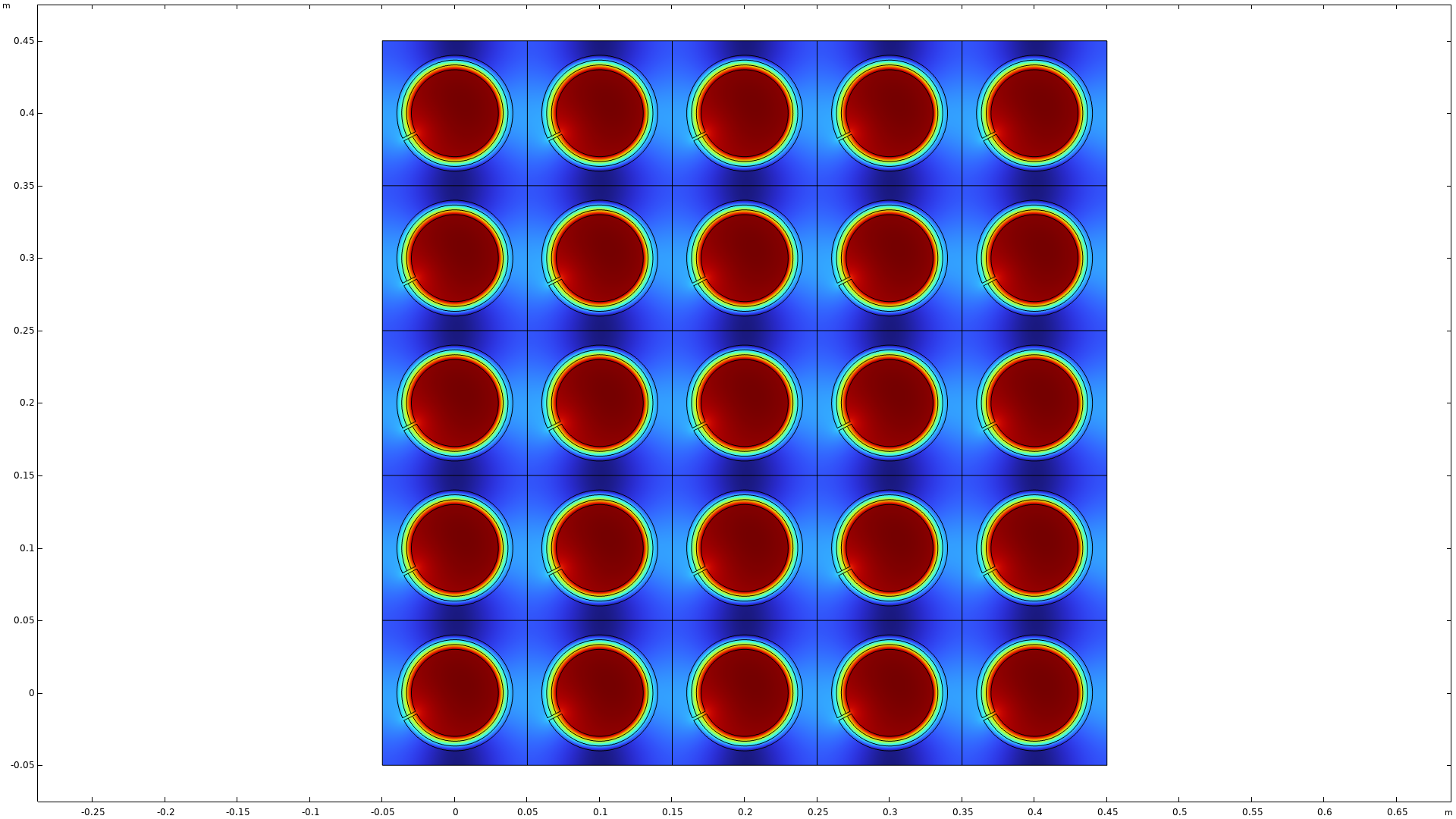
Numerical simulation result of acoustic interactions with metamaterial made of unit cell with Helmholtz resonators causing sub-wavelength perturbations
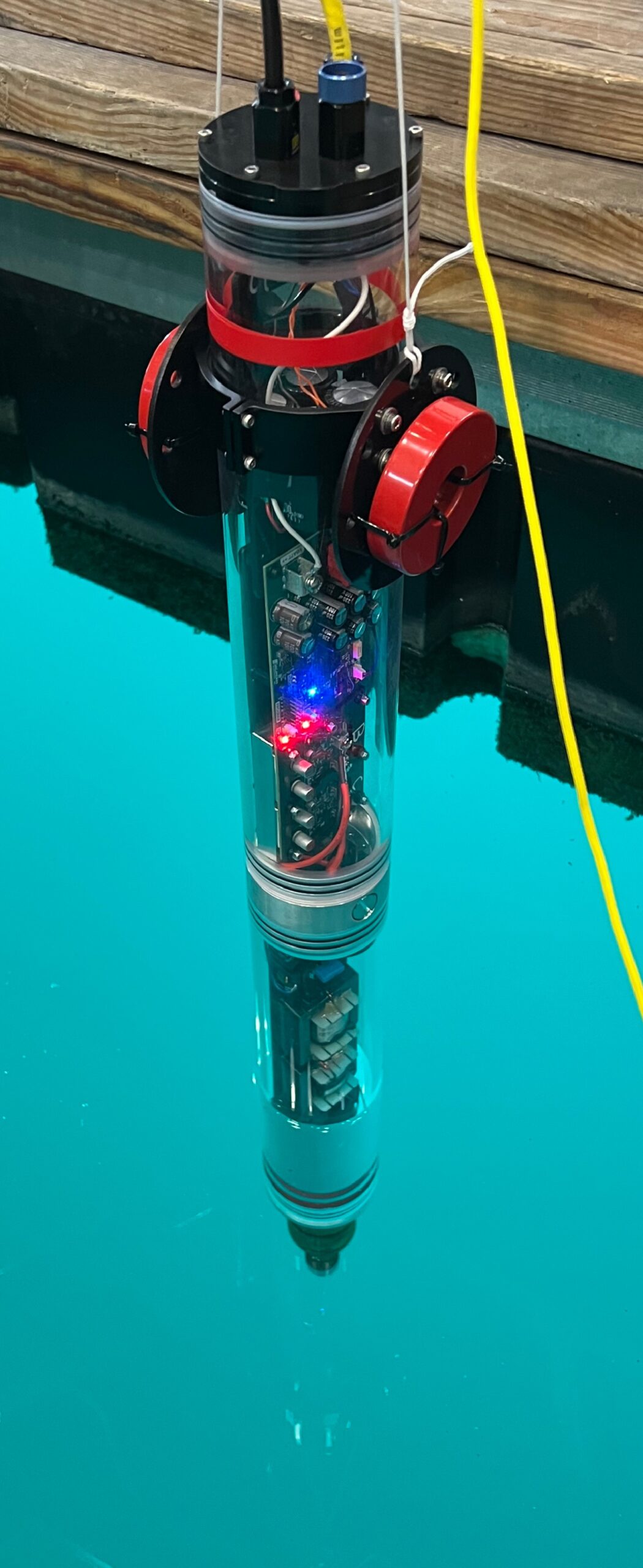
In-water testing of transducer array after being tuned and validated by SDi equivalent circuit and numerical simulations
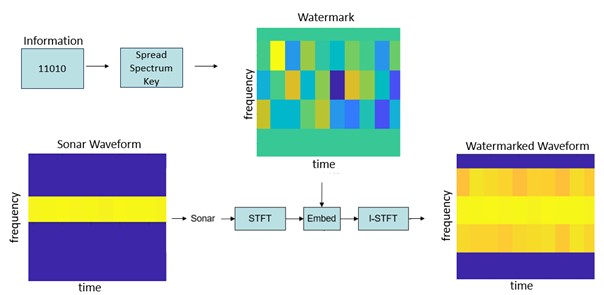
How the information is first processed by a spreading key to create the unique watermark signature.

Watermark Subtlety Illustration
DSP Algorithm Research
Sentient Digital developed a novel DSP technique which lightly alters a basic sonar pulse to covertly encode information for the purpose of validation and source deconfliction. This signal modification has low correlation with other messages and is spread out spectrally to make it more challenging to detect, jam, or otherwise interfere with.
SDi developed custom direct blast removal algorithms to greatly improve signal detection performance. The presence of the DSP modification to a sonar signal can be very subtle and conveys very little information to an uninformed observer who does not have the spread spectrum key.
This DSP algorithm was tested in aggressively simulated environments and exceeded detection requirements while constraining sonar performance degradation below the required threshold. The algorithm also demonstrated successful detection when multiple signals collided. SDi has demonstrated basic performance with live in-water detections.
Systems Prototyping
Sentient Digital leads development for several prototype systems, leveraging advancements in semiconductor technology to improve sensing and processing capabilities. These prototypes are being developed as part of several Direct-to-Phase-II projects for the Navy. With experienced personnel and prototyping facilities, products are being developed that combine hardware, packaging, DSP, and telemetry sub-systems into compact, deployable packages. SDi combines requirements definition, component selection, power design, CAD modeling, fabrication, iterative refinement, and testing to produce advanced prototypes ready for mission success.

CAD model for prototype build
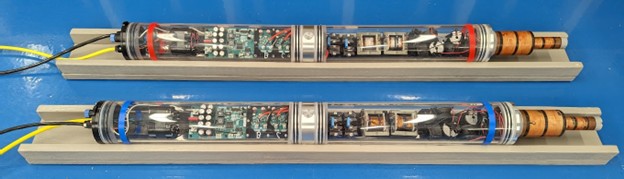
Two fabricated prototypes ready for in-water testing